“Coffee planting and coffee plantations in Yunnan” search results (90)

A brief introduction to the producing area of Yunnan small Coffee and Yunnan Hougu Coffee
Yunnan coffee is a variant of Arabian original species, which has been cultivated for more than one hundred years after long-term cultivation and domestication. Yunnan coffee is mostly planted in dry and hot valleys at an altitude of 1100 meters above sea level, so it has a moderate sour taste, rich and mellow aroma. As far as climatic conditions are concerned, the light time in southern Yunnan is long, which is beneficial to plant growth and light cooperation.
2015-12-12 Yunnan small grains coffee fine products origin brief introduction Arabian planted
History of introduction and expansion of Coffee in China in the early stage of Coffee Development (5)
1. From the first peak period of the development of China's coffee industry (1952-1961) to the late 1940s, according to recorded figures, there are 2173.33 hectares of rubber plantations in Hainan Island, with a total of 867600 rubber trees, with an annual output of 199,000 tons of dry rubber, and more than 300,000 coffee plants. the annual output of coffee beans is 1 ton. According to a survey in the early 1950s, there was a large amount of coffee left in Fushan area of Chengmai County, with a total of 70,000.
2015-03-09 China coffee development course early stage introduction expansion
Yunnan will establish a product quality traceability system for coffee
Recently, in Yunnan Province, China's largest coffee producing area, local coffee companies are "registered permanent residence" for coffee bases in an attempt to establish a traceability system for product quality. by scanning the bar code, you can find out the planting area, altitude, grower, primary processing factory and so on of each cup of coffee.
2014-05-27 Coffee News Yunnan Coffee Chinese Coffee
Coffee planting History of Coffee introduction and expansion in China in the early stage (5)
1. From the first peak period of the development of China's coffee industry (1952-1961) to the late 1940s, according to recorded figures, there are 2173.33 hectares of rubber plantations in Hainan Island, with a total of 867600 rubber trees, with an annual output of 199,000 tons of dry rubber, and more than 300,000 coffee plants. the annual output of coffee beans is 1 ton. According to a survey in the early 1950s, there was a large amount of coffee left in Fushan area of Chengmai County, with a total of 70,000.
2014-10-14 Coffee knowledge coffee growing history Chinese coffee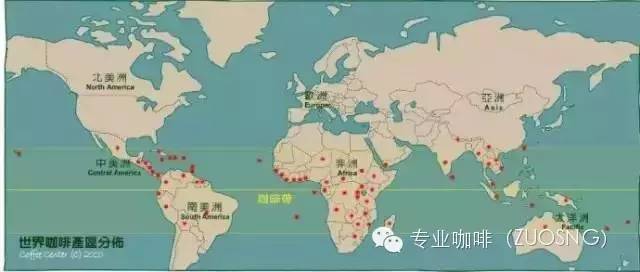
The Historical Progress of Coffee in China: how did Coffee enter China?
The history of coffee introduced into China is not long, and it was not until 1884 that coffee was first planted in Taiwan. In the mainland, the earliest coffee cultivation began in Yunnan. At the beginning of the 20th century, French missionaries brought the first batch of coffee saplings to Binchuan County, Yunnan Province, and coffee began to be grown on the mainland. In terms of natural conditions, many parts of our country, Latin America, South America, India and India
2015-12-09 Coffee China history progress decryption how to enter
The History of Coffee introduction and expansion in China in the early stage (5)
1. From the first peak period of the development of China's coffee industry (1952-1961) to the late 1940s, according to recorded figures, there are 2173.33 hectares of rubber plantations in Hainan Island, with a total of 867600 rubber trees, with an annual output of 199,000 tons of dry rubber, and more than 300,000 coffee plants. the annual output of coffee beans is 1 ton. According to a survey in the early 1950s, there was a large amount of coffee left in Fushan area of Chengmai County, with a total of 70,000.
2014-12-01 Coffee History Common sense early China introduction expansion planting Industry
Introduction of Coffee from 53 Coffee producers in the World (5)
forty-one. Coffee cultivation in Zimbabwe (Zimbabwe) began relatively recently, in the 1960s, when farmers in southern Africa set up coffee plantations. Coffee cultivation in Zimbabwe is mainly concentrated in the eastern highlands near Mozambique, mainly by the Chimanimani mountains and northward Nyanga (Ny).
2014-07-16 Coffee knowledge coffee origin coffee encyclopedia
What does coffee black honey mean? how do you taste the flavor of coffee?
Aiyi Manor Coffee is a national coffee brand in China, which integrates coffee cultivation, processing, product research and development, sales and coffee shop chain built by Yunnan Aiyi Group. It is a key leading enterprise in national agricultural industrialization, a joint venture partner in Starbucks, a member of the American boutique coffee association, and an advanced leading enterprise in the development of agricultural industrialization with Yunnan plateau characteristics. Engaged in coffee industry and cultural promotion in Yunnan
2016-10-20 Coffee raw beans black honey what meaning flavor how
Yunnan Arabica Coffee Introduction Boutique Coffee
Arabica coffee is suitable for growing in the mountains of 800~1800 meters above sea level. If the altitude is too high, it tastes sour, and if it is too low, it tastes bitter. Arabica coffee is mostly planted in dry and hot valleys at an altitude of about 1100 meters, so the acidity is moderate, the aroma is rich and mellow. Many areas of Yunnan Province have unique environments suitable for the growth of Arabica coffee, and the Arabica coffee produced is of excellent quality. plantation owner
2016-07-04 red top coffee yunnan small grain introduction fine main origin
When is the first peak period for the development of coffee planting industry in China?
By the end of the 1940s, according to recorded figures, there were 2173.33 hectares of rubber plantations on Hainan Island, with a total of 867600 rubber trees, with an annual output of 199,000 tons of dry rubber, more than 300,000 coffee plants and an annual output of 1 ton of coffee beans. According to a survey in the early 1950s, a large number of coffee was left in Fushan area of Chengmai County, with a total of 70,000 plants, including more than 40,000 plants in Daji Village and Fushan Farm (Hongguang Farm) 1
2015-02-07 China coffee planting industry development the first peak period when the 1940s
Yunnan small granule coffee
Due to the unique geographical environment and climatic conditions, Yunnan coffee has formed a unique flavor of strong but not bitter, fragrant but not strong, with a little fruit flavor. World-class coffee experts evaluate it as the best coffee in the world, and its cultivation techniques. The yield per unit area is also world-class.
2014-08-08 Coffee knowledge Yunnan small granule coffee coffee encyclopedia
Boutique Coffee introduction to 53 Coffee producing areas around the World
forty-four. In 1715, the first coffee trees (about 40) were transported from the Yemeni port of Moka to La Runion, but unfortunately only two survived. By 1719, coffee plantations had flourished and the first beans were sold. Over the next few years, the government took a hard measure: the islanders, black and white, had to plant 100 coffee trees a year.
2015-01-19 Boutique Coffee Global 53 Origin introduction 44 Reunion 171st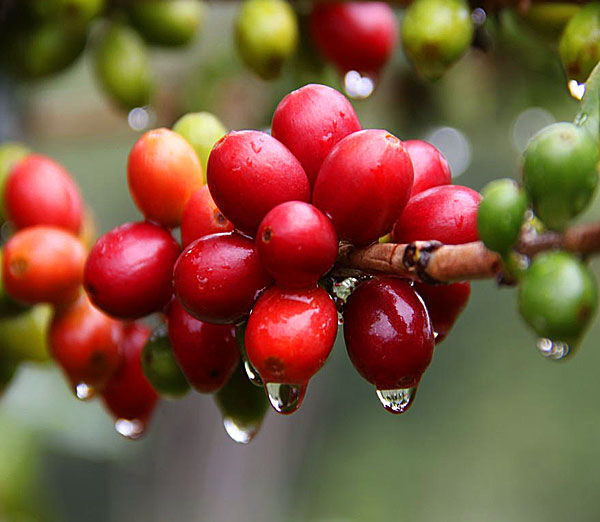
Development of Coffee in China Coffee production in Yunnan accelerates the development of coffee industry in Yunnan Province
Yunnan Province is the largest coffee bean production base in China. Recently, Yunnan Province has issued opinions to speed up the development of the coffee industry from the aspects of building a high-quality coffee bean production base, building leading enterprises, and upgrading the level of science and technology. The Coffee Industry Development Plan (20102020) issued by Yunnan Province proposes to build Yunnan into the raw material base of the world's high-quality coffee beans in the next ten years.
2016-03-31 China Coffee Development Origin Yunnan acceleration Industrial Development Yunnan Province planting
Coffee fruit plantation
This 3-year-old Japanese girl, who speaks Mandarin in Yunnan, is always popular with farmers from all over the country. During the last picking season of coffee fruit, her parents Tian Daiju and Tian Daisi were the busiest. In this way, Tian Daihe has free space to haunt every corner of the coffee fruit manor. There are coffee fruits drying in the courtyard, these small white ones
2014-08-12 Coffee fruit coffee fruit planting coffee manor
Starbucks' first coffee base in Asia opened 1500 in China in 2015.
Starbucks has made a lot of moves in China this year, not only faster to open stores and updated marketing methods, but also to invest more in raw materials. Starbucks announced the official opening and operation of Asia's first coffee grower support center in Pu'er, Yunnan Province. In addition, Starbucks also said that according to his signature with the Yunnan Academy of Agricultural Sciences and the Yunnan Pu'er people's Government
2014-04-27 Buck Asia first Coffee Base settled Yunnan 2015 China
Yunnan small Coffee introduces the characteristics of Yunnan Coffee the taste and flavor of Yunnan boutique coffee
Yunnan small-grain coffee: Yunnan small-grain coffee, Rubiaceae, coffee genus, the planting area is mainly distributed in Lincang, Baoshan, Simao, Xishuangbanna, Dehong and other states. [1] small grains of coffee are native to Ethiopia or Arabian Peninsula. It is cultivated in Fujian, Guangdong, Hainan, Guangxi, Sichuan, Guizhou and Yunnan. The Origin of Yunnan small Coffee: in 1892, French missionary Father Tian
2016-03-19 Yunnan small grains coffee introduction characteristics boutique taste flavor
Fine coffee beans recommend Yunnan small granule coffee
Due to the unique geographical environment and climatic conditions, Yunnan coffee has formed a unique flavor of strong but not bitter, fragrant but not strong, with a little fruit flavor. World-class coffee experts evaluate it as the best coffee in the world, and its cultivation techniques. The yield per unit area is also world-class. Coffee is rich in protein, fat, sucrose, starch, caffeine and other substances.
2014-10-29 Coffee knowledge coffee bean recommendation Yunnan small granule coffee
Introduction of Chinese Fine Coffee beans Yunnan small granule Coffee
Due to the unique geographical environment and climatic conditions, Yunnan coffee has formed a unique flavor of strong but not bitter, fragrant but not strong, with a little fruit flavor. World-class coffee experts evaluate it as the best coffee in the world, and its cultivation techniques. The yield per unit area is also world-class. Coffee is rich in protein, fat, sucrose, starch, caffeine and other substances.
2015-01-19 China boutique coffee beans introduction Yunnan granules coffee due to
Yunnan Coffee Information: he started his business from a 5-mu coffee field and has been exported to more than 42 countries and regions.
It is well known that the coffee industry in Yunnan has a history of more than 100 years, but I do not know how many changes it has experienced in the past 100 years. Historical Origin of Yunnan Coffee after the end of the Sino-French War in 1887, France signed a treaty with the Qing government, designating Mengzi in Yunnan as the trading port. This is the earliest trading port in Yunnan and soon attracted foreign businessmen, France and Britain.
2015-12-21 Yunnan coffee information he starts from 5 mu start a business sell far away many countries
Enterprises create coffee with "ID card" for the "registered permanent residence" of the coffee garden.
In Lincang City, the second largest coffee growing area in Yunnan Province, a local company is "registered permanent residence" for coffee plantations by establishing a traceability system for coffee products, so that every bag of coffee has an "ID card". At that time, by scanning the QR code on the coffee package, consumers can know what kind of coffee they are consuming, the altitude of the origin, and so on, so as to realize the seamless monitoring of coffee quality.
2014-06-18 Coffee News Yunnan Coffee Coffee Encyclopedia